

EXCLUSIVE ATTENDEE BENEFIT
Airlines Top 75 AI Readiness
Your Fitness for Visibility Audit
As AI grows, are you fit for visibility, and are your directors and officers unnecessarily exposed?
AI READINESS: YOUR FITNESS FOR VISIBILITY
See what AI can reach, interpret and repeat about your organisation.
Being fit for AI visibility means being found, read correctly and represented in terms you would stand behind. As AI grows, what it repeats about your organisation matters to those accountable for it.
Request the Top 75 airlines sector results and an AI readiness fitness-for-visibility summary for your organisation’s main website.
This complimentary assessment is an exclusive benefit for attendees of the World Aviation Festival in Lisbon.
Connect with me

Dipo Ajose-Coker
Head of Marketing, Content Technology
Connect on LinkedIn with Dipo Ajose-Coker (opens in a new tab)For World Aviation Festival attendees
Your AI Readiness Results
Top 75 sector results and your main website summary.
By submitting your details, you agree to their use under the AAAnow privacy policy (opens in a new tab) and confirm this is a commercial request.
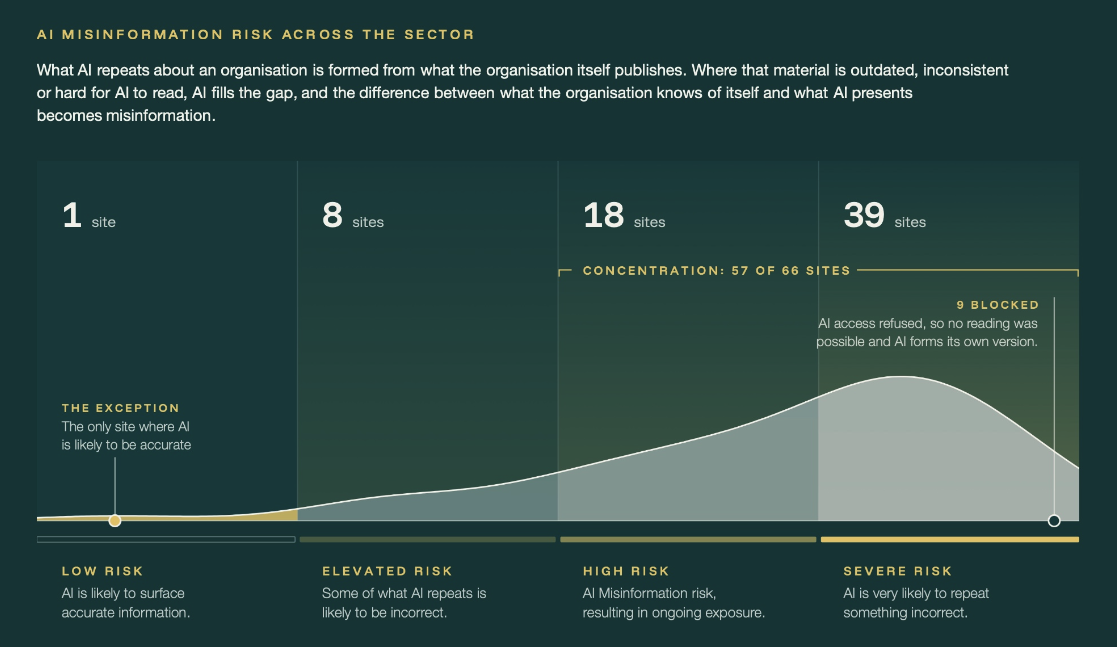
AI misinformation risk across the sector
Read the chart summary
The chart shows 1 site at low risk, 8 at elevated risk, 18 at high risk and 39 at severe risk. It highlights a concentration of 57 of 66 sites across the high and severe risk categories. Another 9 sites are marked as blocked to AI access.
- 01
Digital Doorway
Can AI see and access your organisation online?
See which tested AI access routes appear open, closed or constrained.
- 02
Readiness summary
Can AI interpret your pages, documents and information?
An outside-in view of the public information environment AI encounters.
- 03
Asset summary
Where could AI produce an incorrect or misleading account?
Understand what is affecting your position across web and PDF pages.
RWS. Where airline websites
are managed.
Tridion Sites, the content platform airlines use to manage many websites, brands and languages, and to deliver that content to each channel travellers use.
China Airlines
Unified design across
12 sites, 11 languages.Turkish Airlines
Global reach across
250 sites, 13 languages.Emirates
Regional content on
168 sites, 28 languages.
For airline leaders
Ten questions about AI Readiness for your airline
Depending on applicable law and their own conduct, directors and officers could face personal liability in areas including:
- Oversight failures (opens in a new tab): bad-faith failures to monitor mission-critical risks or consciously ignoring serious warning signs.
- Misleading disclosures (opens in a new tab): fraudulent statements to investors, including false claims about AI capability.
- Cybersecurity governance (opens in a new tab): breaches of management responsibilities under applicable cybersecurity legislation, including national laws implementing NIS2.
Any conclusion depends on the individual’s responsibilities and the evidence.
RWS’s Tridion Sites (opens in a new tab) helps airlines keep content consistent across brands and languages through shared updates and translation workflows. Its China Airlines case study (opens in a new tab) and Emirates case study (opens in a new tab) case studies show how airlines use the platform to manage multilingual websites.
Set an executive mandate for one content platform and one way of delivering web pages and PDFs. Standardise the processes for publishing, maintaining and removing content, so departments follow the same system. Make control and removal of digital sprawl explicit objectives of that mandate.
AI can encounter outdated websites, contradictory pages and documents that remain online (opens in a new tab). Reviewing that material identifies content to correct, consolidate or retire as part of the airline’s AI programme.
Fitness means being found, read correctly and represented in terms your organisation would stand behind. Review whether AI can reach and interpret your main website (opens in a new tab), and where its content could contribute to likely misinformation.
Bring the chatbot’s source content under the same publishing controls as the website and PDFs. Check its answers against the applicable passenger information, then address conflicting source material as well as the response passengers receive.
Review the information and processes those agents will rely on, including cancellation and passenger recovery content. Bring those sources into the same publishing process, with clear responsibility for keeping them accurate as circumstances change.
Yes, AI systems can encounter older documents that remain publicly available (opens in a new tab). Include PDFs in the content review, identify which remain valid, and retire or clearly distinguish superseded material.
Establish the starting position, make corrections and repeat the assessment. Keep a record of changes and unresolved findings so leadership can see what has improved and what still needs attention. Ongoing monitoring and independent reporting (opens in a new tab) support that continuing review.
The offer includes the top-level sector results for the Top 75 airlines and an AI readiness fitness-for-visibility summary for your organisation’s main website. We will confirm entitlement by email and ask which website you would like assessed.